Olov Harman was a Swedish theologian of the 20th century. I was introduced to his work not as a theologian but as a dramatist. He wrote several “liturgical plays” that were popular fare in Sweden 50 years ago. In an essay on worship, Hartman made a startling observation about counseling and Christianity. He noted that, beginning with Freud, the location of most counseling shifted from the altar in the church, supervised by a priest, to the psychiatrist's couch.
I remember reading that for the first time and being spell-bound by the observation. How true! And I also have spent many years thinking about the implications. If the psychiatrist's couch is where counseling occurs, the focus is on the client himself, as therapist and client together conduct their deep analysis of the hidden corners of his heart. There may be a place for that but where can it really go, except deeper and deeper into the client's subconscious mind? No wonder the “therapeutic culture” so prevalent in the church today has done little to make an impact on the marriages, families and personal lives of Christians (mental health and family health statistics for Christians are never much different from any others). Couch-centered therapy is so focused on the client it perpetuates the underlying problem: the narcissistic worship of self.
On the other hand, if the place of Christian counseling returned to the altar—perhaps even literally—how much different the focus could be! And when I say “literally”, what if it really was? What if there was an altar in the counseling office? What if a Christian counseling session were designed to end in worship? What if Christian counselor and client knelt together at on the floor or on a bench and spent a season in confession and thanksgiving? What if, to go even further, it was designed to end in that consummate expression of worship, the breaking of bread (communion)? Talk about a dramatic demonstration of our reliance upon God to do the work!
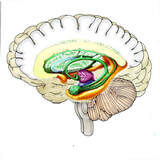
I love Christian Counseling! I've been a student of it for nearly 30 years and a practicing, licensed professional for the last two years. So, I think I'm in a good position to see its strengths, as well as its weaknesses. That's what this article is about. I've decided to call it the Five Hidden Dangers. The list may surprise you 1. Moralism – Behavioral Change is Life Change There is nothing wrong with morality! Morality speaks of an adherence to an ethical code; doing what is right; avoiding what is wrong. But “moralism” is a corruption of morality. As I use the term it means we focus on external codes of behavior but give little thought to what’s going on in the heart. In counseling this means the counselor utilizes a kind of Christian Behaviorism, using proven techniques to get the client to change his or her actions and habits. Some of these behavioral practices may be, in themselves, good. For example, many Christian counselors will encourage the client to begin praying or reading the Bible daily. No one Christian would argue this is a bad idea! However, moralism in the counseling process means that because the client begins a prayer routine he now thinks (or the counselor implies, intentionally or not) he has changed. But that is clearly not an accurate assessment of what has happened. Even monkeys can learn new habits! There is a sweeping emphasis in the church today on character instruction. I suppose it’s been with us for a hundred years, but it’s very common today to hear entire sermons devoted to character qualities. Again, there is nothing wrong with character or virtue! However, too often this emphasis comes at the expense of two things: a.) heart change—the listeners are not taught or reminded that the only true morality begins in the heart. b.) self-deception –the more moralism is emphasized the greater the likelihood of a secret self. That’s because the “real” self (as found in the “heart”) is buried or hidden away under the guise of behavioral compliance. Corrective: Pietism What can Christian counselors do to guard against the error of moralism? There needs to be an active, thoughtful and Christ-centered “pietism.” Pietism, as the term suggests, is the expression of “piety.” I realize there was a historic movement of pietism that is often challenged for its orthodoxy. That’s not what I’m referring to. Though the term “pious” has become pejorative in our day, indicating some kind of false humility, the historic use of the word is not that at all. Historically, pietism was a movement of deep devotion for holiness and godliness during the Reformation period of church history. Pietism, as I use the word, means an emphasis on life change, not just behavioral change. 2. Dualism – Fragmentation of Biological, Psychological and Spiritual Since Adam and Eve ate the Forbidden Fruit, plunging the world into chaos and confusion, fragmentation has characterized humanity and culture. In the original creation there was no fragmentation. All was integrated and unified. In terms of our anthropology (study of mankind) this means that in the original creation, matter and spirit—body and soul—functioned in a kind of seamless harmony. As to the ontological basis for that statement, I cannot take the time to develop it here. Let’s just say that if there were any counselors in the Garden of Eden they would never have worried about whether an issue was “biological” or “spiritual.” This all began to change after the Fall. And the fragmentation in theory and practice has continued ever since. In the history of theory, there was a massive shift during the time of the Greek philosophers to address the pendulum swings with a new approach called “dualism.” Philosophical dualism did not swing back and forth between an emphasis on matter or spirit but attempted to hold both in an uneasy tension. Again, how that played out in history would take us beyond our scope here. Let’s just say that one usually swallows up the other. This is where we find ourselves today. Christian counselors are typically not philosophers and most I know do not even view themselves as theorists but practitioners and clinicians. So these kinds of debates often seem irrelevant to them. But they are not. And most Christian counselors have, by default, accepted the conventional dualistic wisdom of our age. Consequently, there is an uneasy and uncomfortable conflict between matters of the body and matters of the soul. This conflict has the practical effect of creating a bifurcated or compartmentalized approach to various kinds of problems. For example, “physical problems” are considered the domain of “medical doctors” and “psychological problems” the purview of “psychologists.” Some will allow that “spiritual problems” are best addressed by pastors or spiritual advisors. But the way these problems are defined makes a lot of difference! Corrective: Holism I believe the resulting compartmentalization and fragmentation of caregiving is one of the greatest challenges facing Christian counseling today. Ideally, all caregivers would be trained to view the individual holistically. This doesn’t mean there is no room for medical specialists or spiritual advisors. However, the person under care must beware of allowing the various specialists to aggravate the conflict between the different perspectives. The corrective for this error is a dynamic and theologically consistent “holism.” Those qualifiers are all important. There are many who champion “holism.” But not all holism is worthy of the term. It is not enough for holism to focus on the whole person. There must be an accurate frame of reference within which that focus occurs. This is where much of the holism goes badly astray. “Holism” in the eyes of a New Age Guru looks very different from holism in the eyes of a biblically grounded caregiver. 3. Synergism – Relying on Natural Resources more than the Power of God It isn’t surprising that professional caregivers would be more inclined to trust their own advice and resources . That is typically what advanced education and training attempts to instill. But what is “expertise?” There are Christian counselors and teachers who have a great deal to offer. However, Christianity has suffered for generations from a refusal to acknowledge its own limitations. It has become a victim of its own expertise. In theological terms, there is a common notion that Christian practice is a cooperative effort between God and man. The old adage, “God helps those who help themselves” is one statement of this perspective. In more technical terms, the theoretical justification for this view is called “synergism.” Synergism just means that two different forces combine to make something new take place. In Christian counseling, synergistic views usually result in a greater emphasis on taking charge of your life; of “intentional living” or, in the words of Nike Footwear: “just do it” theology. There is much to be commended about “just do it” theology. At least it’s not passive or irresponsible! The problem is, it doesn’t work. It may accomplish a lot of things but it misses the most important. Synergistic theologies, when they have short term success, make us believe we can do anything we set our minds to. And what happens over time is they undermine our confidence and trust in God. We may give lip service to God’s power in our lives but we don’t really live like it. Why should we? We’ve managed things quite well on our own. Corrective: Monergism While we would never want to undermine a person’s determination to change or to do battle with stubborn sinful behaviors in his life, a synergistic foundation will ultimately lead us astray. That’s why we need a “monergistic” theology. Monergism, like the prefix suggests, does not emphasize cooperative effort between God and man but depends fully on God recognizing that without him we can do nothing. While synergism says, I can do all things—monergism qualifies that through the recognition that human effort will never succeed. That’s why the Bible says, I can do all things through Christ who strengthens me. This is no mere afterthought or sugar coating. Monergism is very narrow and intensely counterintuitive. However, it is a needed corrective to the synergistic theology so common in Christian counseling today. 4. Syncretism – Confusing Christian and Non-Christian Assumptions Like “synergism,” “syncretism” is another example of an uneasy alliance that ultimately resulted from Adam’s Fall. Syncretism is defined as the mixing and combining of various beliefs and viewpoints—typically conflicting beliefs and viewpoints. Christian counseling has become a minefield of syncretic ideas parading under the banner of “eclecticism” or “integrationism.” It would be impossible in this space to address even a fraction of the syncretic errors in Christian beliefs today so I will have to limit it to one that has a special impact on counseling: the assumption about self-image. How often have we heard that a person has a “poor self-image” or suffers from “low self-esteem?” How often have we heard that the solution is to have a “good self-image” and to increase one’s self-esteem? Such thought appear often in Christian counseling manuals, sermons and self-help books. But I would argue the entire concept of self-esteem is an example of syncretism—confusing Christian and non-Christian assumptions about human nature. Corrective: Iconoclasm The only way to deal with this error is to plumb the depths of all our viewpoints, peeling back the layers of our terminology and belief until we get down to the assumptions. Assumptions are where this battle can be fought and won. But only when we do the hard work of exposing them. This is what “iconoclasm” is all about. You may know that, historically, iconoclasts were those who destroyed icons. They were especially active during the early days of the reformation—in church buildings and public buildings, ridding them of statues and other “graven images.” Debating the ultimate value of their iconoclastic pursuits will have to wait for another time. My point here is that iconoclasm is not just about shrines and figurines. It’s about anything that purports to be worthy of our devotion and worship. Some well-meaning Christian counselors do get this problem. And as a result have rejected out of hand all psychological and counseling theory. Sadly, they forgot that you don’t have to throw out the baby with the bathwater. There are insights and values to be gained from even the most blatantly erroneous theorists and researchers. For example, one of my favorites relates to brain structure. Briefly, research scientist Paul MacLean was an evolutionary scientist who argued for a “triune brain.” He based his views on the assumption that human beings evolved over millions of years, developing added brain capacities and functions through the process of natural selection and survival of the fittest. Many Christians would reject MacLean’s research because of his evolutionary language and assumptions as “syncretic.” However, the syncretism is not found in talking about a triune brain. In fact, if MacLean was correct, it could actually point to a divine creator of the brain who made his creatures in his own (triune) image. The syncretism is not in every observation of MacLean’s but in his worldview. The syncretism is the evolutionary assumptions that underpin his triune brain theory. This is just one example of how careful we must be in our iconoclastic pursuits that we don’t throw out the baby with the bathwater. Christian counseling can learn much from the theorists and researchers. However, we must not adopt their views uncritically. 5. Legalism – Self-Righteous Judging of Others A fifth error in Christian counseling is more related to practice. It is especially evident in churches and organizations with a great emphasis on caregiving and problem solving. I’ll subsume the entire error under one big label: legalism. Legalism, like moralism, ultimately focuses on the trees instead of the forest. It is so busy looking at what a person does it overlooks who he is. But legalism does something else: it attempts to use social dynamics to accomplish its objectives. It uses the power of “self-righteousness” to judge others. Like the Pharisees of Jesus’ day, it creates different classes of people based on compliance to external codes of morality and behavior. But its worst infraction is the motive behind it. Unlike moralism, it isn’t just overlooking the heart-issues. In fact, many legalists spend quite a bit of energy focusing on the heart—of everyone else. The failure is to examine their own. Legalists are fond of straining at gnats and swallowing camels, to cite Jesus’ condemnation. They are quick to see the “splinter” in their brother’s eye (the sin problem or conflict) meanwhile they neglect the “log” in their own. Corrective: Humility The solution for legalism is always the same: humility and brokenness of the legalists. This is why Jesus said that we should pluck the log from our own eye before trying to deal with the dust in the other’s. In terms of counseling, this means caregivers and counselors dare not become self-righteous judges of others in their effort to control and direct them. It doesn’t mean we cannot confront error in others. But it does mean we better not unless and until we’ve dealt with the errors in our own lives.
When I became a pastor some 30 years ago, I was but 25 years old. Within months I was inundated with requests for pastoral counseling by people old enough to be my parents and grandparents. That was not something I anticipated. I had little training in it. But I took to it like a fish to water. It went pretty well in those early days, too. I remember getting a call one afternoon from someone outside my congregation thanking me for the work I had done with his daughter and son-in-law who were having marital problems. “You have an amazing gift,” he told me. “God has given you wisdom beyond your years.” I reveled in comments like that for years after. And I decided that God had uniquely equipped me to counsel others. I devoured books on counseling, attended training workshops and even considered opening a full time counseling practice. All the while I was working from the assumption that counselors are called to solve people's problems; they are fixers. My college president once described himself as a man with “dozens of solutions just waiting for problems to attach them to.” That's kind of how I saw my counseling practice: lots of solutions. All I needed was to hear someone's problem and I would sort through the list and find one that fit. A lot has happened between then and now. For one thing, I am indeed a professional counselor now, with a full practice. I even went back to school a few years ago to get a counseling degree and began the arduous task of licensure with my State. I know more about counseling, both theoretically and practically, than ever before. And yet, the longer I do this, the more I become convinced that I've grossly misunderstood the counselor's task. I'm also convinced that for years I grossly misunderstood what was going on in the counseling “successes” I experienced. To put it simply, I'm seeing myself these days more as a caregiver and less as a fixer. I won't say God never allows me to solve someone's problem. But I will say that when I do, it's in spite of me, not because of me. Lest you think this is merely false modesty—or worse, a perverse attempt at self-validation—let me bring some psychological theory to bear. Thomas Szasz is regarded as the founder of the “antipsychiatry movement.” In case you've never heard of him, he devoted his career to exploding the myths of psychological and psychiatric approaches. Szasz has an entertaining, acerbic writing style (“when a man talks to God we say he's in prayer; when he says God talks to him, we call him schizophrenic”). Perusing the titles of some of his books will give you an idea where he's coming from: 1974 (1961). The Myth of Mental Illness: Foundations of a Theory of Personal Conduct. Harper & Row. 1991 (1970. Ideology and Insanity: Essays on the Psychiatric Dehumanization of Man. SUP. 1997 (1977). Psychiatric Slavery: When Confinement and Coercion Masquerade as Cure. SUP. 1998 Cruel Compassion: Psychiatric Control of Society's Unwanted. SUP. Here is how one reviewer summarized Szasz's views in Cruel Compassion: : Cruel Compassion is the capstone of Thomas Szasz's critique of psychiatric practices. Reexamining psychiatric interventions from a cultural-historical and political-economic perspective, Szasz demonstrates that the main problem that faces mental health policy makers today is adult dependency. Millions of Americans, diagnosed as mentally ill, are drugged and confined by doctors for noncriminal conduct, go legally unpunished for the crimes they commit, and are supported by the state - not because they are sick, but because they are unproductive and unwanted. Obsessed with the twin beliefs that misbehavior is a medical disorder and that the duty of the state is to protect adults from themselves, we have replaced criminal-punitive sentences with civil-therapeutic 'programs.' The result is the relentless loss of individual liberty, erosion of personal responsibility, and destruction of the security of persons and property - symptoms of the transformation of a Constitutional Republic into a Therapeutic State, unconstrained by the rule of law. You may wonder if Szasz was some kind of religious fundamentalist fruitcake. He may be a fruitcake. But he's definitely not a religious fundamentalist. Szasz, an MD, was for years a professor in medicine at the New York State University--in addition to his prolific writing and speaking career. I bring Szasz to your attention not because I agree with everything he says but simply to make a point that not all caregiving professionals like the direction our industry is headed. Szasz goes so far as to accuse the mental health industry of building a “pharmocracy”(rule of drugs) akin to ancient “monarchies” (rule of kings) or medieval churchmen's desire to build a theocracy (rule of God). The foundation for Szasz's criticism of our therapeutic culture is his radical libertarianism and humanism. I don't follow him in that direction at all, of course (I'm an unashamed Calvinist on that issue). Thus, he believes that when one person tries to fix problems it quickly turns into a coercive, dehumanizing exploitation. So does this mean there is no job for us professionals? I don't believe that either. But if there's anything I've learned over the last few years as a counselor it's the importance of being clear on my role in the life of my clients. What am I really supposed to be doing for them? Am I caring for them or fixing them? On the other hand, this doesn't mean I just sit there and watch as they self-destruct. There are things I must say and things I must do—even beyond a listening ear and a caring hug. It is still the truth that sets us free and God calls me to be a messenger of that truth. However, note that it is not I who sets people free! And in my role as a caregiver I must always be careful to make that distinction.
Certainly the Ten Commandments stand alone as an authoritative declaration of both God’s moral character—his personality—and our responsibility in light of that. But I think there are even more practical applications in specific areas of life. For example, in my profession as a counselor. One way of using the Moral Law is as a grid through which to establish and then evaluate my activities with my clients. In other words, mHow would that work?
Ethical Standard 1: Focus - Directing all my time, talents and treasures toward the most important tasks before me. (Commandment: No other gods)
Biblical Rationale: Jesus said we should “seek first the kingdom of God and his righteousness and all these things shall be added unto you” (Matthew 6:31-34). This is the principle underlying the ethical standard of “focus.” Focus means we put first things first. Ultimately, God and his kingdom is our first priority. This means we put his interests before our own. Thus, the Apostle Paul said that Christians should “esteem others better than themselves” (Philippians 2:3). In caring for others, this means we treat the other person as the most important task before us in that moment, directing our mental, emotional and physical resources toward meeting their needs. Practically, this requires the development of Attending Skills in the caregiver.
Ethical Standard 2: Critical Analysis - Being alert to dangerous traps before I am persuaded to wander into them. (Commandment: No graven images)
Biblical Rationale:
Scripture says that if a mature Christian sees someone overtaken in a trap or in trouble he should “restore such a one in a spirit of meekness” and that we should “bear one another’s burdens and thus fulfill the law of Christ” (Galatians 6:1-3). The traps where people find themselves are numerous. There are traps related to their thinking (such as false beliefs); traps of their feelings (destructive attitudes); and traps of actions (such as addictions). Practically, caregivers are able to fulfill this command using Analytical Skills.
Ethical Standard 3: Respect – Speaking to and about others in ways that give them dignity and value, not based on what they have or have not done, but because of who they are. (No profane speech)
Biblical Rationale:
All human beings are made in the image of God (Genesis 1:26-28), “fearfully and wonderfully made” (Psalm 139:14) and created “a little lower than the angels…crowned with glory and honor” (Psalm 8:5). As creatures in God’s image we are obligated to honor and respect others, treating them with dignity and value not because of what they have or have not done but because of who they are: creatures in God’s image. This is especially necessary in the words we use to describe and address others. An important way of demonstrating respect is to ask questions in a respectful way for the purpose of understanding them as persons. Caregivers must learn to use various types of questioning skills not simply to gather information but also to acknowledge the worth and significance of what they think, feel and do. Practically, caregivers are able to fulfill this practice through proper use of Questioning Skills.
Ethical Standard 4: Diligence - Using my time, talents and treasures effectively to accomplish the most important tasks before me (No breaking the Sabbath)
Biblical Rationale:
The outworking of Focus in caring relationships is Diligence. If we are truly focused on the most important tasks before us we will seek to use our resources diligently and effectively lest we lose our focus. The proverbs warn that lazy people squander their resources (time, talent, treasure) and then, when they are gone, have nowhere to turn (Proverbs 19:15). Caregivers must learn to use specific strategies to accomplish their task of care, all the while remaining diligent in the relationship. For example, they need to learn to diagnose problems and understand real needs. This task can be assisted by the use of diagnostic tasks (such as tests and assignments). They also need to plan and prioritize the times they will spend together to maximize their effectiveness. The Apostle Paul warned that the “time is short” (1 Corinthians 7:29) therefore we must learn to “redeem the time –literally, make the most of the time--for the days are evil” (Ephesians 5:16). Practically, caregivers practice these standards through developing Managing Skills.
Ethical Standard 5: Humility - Honoring those in positions of authority over me so that those under my care will hear and heed my advice. (Commandment: No dishonor to authorities)
Biblical Rationale:
We cannot expect those under our care to hear and heed our advice if we do not demonstrate honor and respect for those in authority over us. This is why the Scripture commands wives to submit to their husbands (Ephesians 5:22) and citizens to submit to governmental authorities (Romans 13:1,2). Christians must not suffer for their dishonor or disrespect of authorities but because of their humility (1 Peter 4:15). When caregivers acknowledge and obey their own authorities (such as, their teachers, their supervisors, the controlling legal authorities) it demonstrates humility and what the Bible calls a “teachable spirit” (1 Peter 5:5). Though God resists the proud we are always commanded to give “honor to whom honor is due” (Romans 13:7). When we do, it is more likely those for whom we care will imitate us as we seek to imitate those in authority over us (1 Corinthians 4:16). One of the great dangers of caring relationships is creating unhealthy dependencies between caregiver and cared for. Many times caregivers secretly encourage such dependency because it makes them feel better about themselves. But when the Apostle Paul pleaded with his followers to “follow him” it was not because of himself but because he was following Jesus (1 Corinthians 11:1). Indeed, Paul commended one group of Christians because they verified his own teachings against the truths from the Bible (Acts 17:11). Practically, caregivers exercise these standards through use of Modeling Skills.
Ethical Standard 6: Mercy - Releasing others from the threat of future revenge into the hands of God. (No murder)
Biblical Rationale:
Our English word “mercy” is derived from a Latin word that means “the price is paid.” It implies that a debt has been satisfied. As a character quality, it means we do not hold other people’s offenses against them. We “release them from the threat of future revenge.” Without doubt, mercy is one of the important attributes of God himself and explains why he offers hope and salvation to those who have offended his laws. Thus, Jesus is said to die on the cross and pay the penalty not for those who were God’s friends but his enemies (Romans 5:8). Christian caregivers are called to show this same kind of mercy, especially to those who reject it or do not deserve it. Caregivers fulfill this call through reflecting mercy to those they serve; through explaining to them the mercy God has for them; and through helping them apply what it means personally in their lives to experience mercy. Jesus modeled how we should practice mercy by forgiving those who mistreated him (Luke 23:34). Our ability to extend mercy to others (especially those who are cruel, who seek to hurt us or malign our character) will increase to the degree we are aware of God’s mercy extended to us (Ephesians 4:32). Practically, caregivers demonstrate these standards by use of Confrontation Skills.
Ethical Standard 7: Contentment – Looking for personal satisfaction and reward in the right paths of life, rather than the wrong ones. (No adultery)
Biblical Rationale:
Jesus illustrated two ways of life in terms of roads or paths. There is a “broad way” that leads to destruction and a “narrow way” that leads to eternal life” (Matthew 7:13,14). According to Jesus, most people follow the broad way. This is the natural way, responding to the greatest problems of life with natural strategies like self-protection, self-gratification and self-validation. But in the process of walking through life on this path we lose our grip on circumstances, relationships and habits; we hide secret memories, feelings and expectations; and we create failed beliefs about our roles, conversations and decisions. This is what leads to destruction.
Caregivers must help others find the true contentment that comes when people are on the right path. This involves at least three things: reconciliation of vital relationships—especially with God (2 Corinthians 5:17-21), confession of their own helplessness and desperation (1 John 1:9) and repentance, involving a change of beliefs (Luke 24:7). Once the right path has been discovered, the task of the caregiver is to encourage the other to stay on the path. Contentment and satisfaction are possible as he keeps his thoughts focused on the future reward God promises to those who walk this path (1 John 3:2,3). Practically, caregivers must learn to use Influencing Skills to effectively explain how this works.
Ethical Standard 8: Justice – Choosing courses of practice based on the knowledge I will be rewarded for doing what is right and punished if I do not (No stealing)
Biblical Rationale: “Mercy” and “justice” are the most important components of God’s character (for example Exodus 20:4-7 combines the two in one description of God). Together they circumscribe his goodness—moral excellence. By implication, mercy and justice also circumscribe the morality of caregivers. Though mercy releases others from threats of revenge, justice works to punish violations and reward those who are compliant. Though caregivers are not law enforcement officers and rarely have punitive authority, they themselves must maintain the highest standards of morality. In practice, this means patterns and practices of accountability, knowing they will be rewarded for doing what is right but punished if they do not in at least three areas: skill competency, demands of caring relationships, confidentiality and privacy of information. Practically, caregivers must use Accountability Skills.
Ethical Standard 9: Reliability – Becoming an accurate messenger of truth so that others can make decisions based on what I say. (No false witness)
Biblical Rationale:
One of the most important elements in a caregiving relationship is truth. Truth is a necessary foundation for communication and trust. This highlights the necessity of becoming an “accurate messenger of truth”—the definition of reliability. Reliable messengers understand that words have consequences. They guard against idle words (Proverbs 14:23) and careless, meaningless use of speech knowing the damage it can cause (Proverbs 12:18). They diligently try to follow the biblical injunction to “always let your speech be with grace, seasoned with salt, so that you may know how you ought to answer every person” (Colossians 4:6). Ultimately, caregivers know that when they try to help others they must do so honestly and truthfully lest they be blindsided by trouble themselves (Galatians 6:1-4). This requires that caregivers have a high degree of self-awareness (listening to themselves speak); careful use of self-disclosures (how to use personal examples); and be alert to self-limitations (knowing the proper use of personal boundaries in relationships). Practically, caregivers must learn the use of Disclosing Skills.
Ethical Standard 10: Generosity - Using my time, talents and treasures to benefit others even though they may reject it. (No covetousness)
Biblical Rationale:
The Bible presents God as infinitely merciful yet fiercely just. Even so, out of this unusual combination flows his generosity. Generosity means that God is always giving rather than taking. The greatest demonstration was the gift of his only son, Jesus (John 3:16). His generosity was more astounding because those to whom he gave this gift were not his friends but his enemies (Romans 5:10). This kind of generosity is to characterize caregivers as well. As they use their caregiving time, talent and treasure they keep giving to the benefit of others even if the others reject it. Nor do they give with secret motives and hidden agendas for personal benefit for such giving is not true generosity (Luke 12:15). While all caring relationships involve the voluntary exchange of time and talent, there may be situations where there include an exchange of treasure (money) or some tangible honorarium. In this case caregivers must be extra careful that they do not become opportunistic and mercenary—serving only for personal gain. In the practice of generosity, caregivers must learn the proper use of Motivating Skills.
So, what happens when it does not? What happens when we refuse to ground our laws and ethics in this standard? In fact, what happens to our understanding of ourselves—of personhood itself—when we reject this design? I'll address those questions in the next article.
I did something this morning I haven't in a long time: I broke down in sobbing tears. I've shed a few now and then over the years. But it's been a long time since I cried so hard. Why? Someone die? I just got diagnosed with terminal cancer? No. Nothing so definitive. I'm really not sure why other than an accumulation of lots of stresses and disappointments and frustrations that finally burst forth. I can't really say I feel better now because I cried. But at least I know how deeply afflicted I am.
The overwhelming feeling I had during my crying jag was loneliness and isolation. I kept muttering (to God) about being so alone. I guess that's what I feel—though it would be hard to prove that it's real. I am surrounded by people who love and care for me. And God is right there beside me too. So, why do I feel so alone?
Usually the first step into a storm of trouble is losing our grip. We lose our grip on circumstances, relationships and habits. I can see how that has been happening to me. There are several circumstances in my life right now that, while not overwhelming in themselves, accumulate to make me feel helpless and out of control. I have some issues with my health (blood sugar); I have some issues with my job, and I have some anxieties about my future. Over the last months I've been losing my grip on those things and feeling less in control. Meanwhile, the relational attachments meant to stabilize me and reassure me that “all is well” even with the turmoil in my circumstances don't seem to be powerful enough. So, I lose my grip on them as well.
But I still wonder about this sense of isolation and loneliness. Why do I feel that way when I do have so many significant and committed relationships? I can think of only one ultimate answer. There is only one relationship that will really do the job in a storm. You know where I'm headed with this: it's Jesus.
As wonderful as my marriage and family are; as thankful as I might be for the friends and colleagues I have; as gratifying as it is to have vital ministries in the lives of so many people as a counselor, it all still pails in comparison to what I really need. It's the old “restless heart” issue. My heart will always be restless, no matter how many good things I might have, until it finds its rest in God alone.
Of course, this all begs a pretty important question. Just knowing all this doesn't make it so. Just knowing I need Jesus—and even just knowing he is there—isn't the same as feeling the everlasting arms. And that's really what I need right now: a sensory experience of his presence.
I've been doing a study on Bible meditation for my church and exploring the topic of intimacy with God in ways I haven't done before. There is no end to mystical and even bizarre discussions about how that happens. I'm not going to recount them here. But I will say that the only sure way to avoid some of the insanity is to have a Word-based approach to this. While we can meet God face to face and feel his loving arms (“Jesus hold me close, closer Lord to you, let the world around me fade away...”), we won't really know if that's what happening unless we meet God in his Word. It's the words that become vessels of that intimacy: the entrance of God's word gives light...
So, if I'm going to overcome this feeling of isolation and loneliness there is really only one way: I have to meet God in a more profound way, “behind the sacred page....”
If you have been in a church at all in your life you've heard of the Ten Commandments. Of course, it used to be that you wouldn't even have to darken the door of a church to not only hear about them but to memorize them. Depictions of the Tablets of Stone received by Moses from God 3000 years ago were sculpted on court buildings and memorized by school children. Unfortunately, that's all changed to the point where a network newscaster would be forced a few years ago to opine that the “Ten Commandments are not the Ten Suggestions.” Oh really?
So, what is it about the Ten Commandments that makes them so special? Again, if you're a Christian or a church goer at all you probably know they were given to Israel by God on Mount Sinai a long time ago. They were to form the moral foundation for God's people. But I want to go much deeper into the heart and soul of the Ten Commandments than just where they came from or even how they have been applied. I want to push you to consider where this amazing “decalogue” (meaning the “ten words”) actually originated. Yes, it came from God. But it wasn't some arbitrary compilation of “ten suggestions.” I believe the Ten Commandments, or what I will also call the Moral Law, is actually a structured but simple description of the character of God himself. It describes the things important to God, yes; his values and priorities. But it's more than that. It's also a way to glimpse the very soul of God; who he is in his nature.
I want to spend a few minutes explaining what I mean by that. But I will quickly go on to show you how those windows into God's soul also define what God wants us to be and what happens when we lose sight of them. For at their very core, the Ten Commandments represent to us what it means to be a person and when the Moral Law ceases to be the guiding light of our understanding of personhood we become psychopathic monsters.
No Other Gods – God is Focused The first command says we are to have no other gods but God. It's a command about priorities; what is most important. Thus, the law is often summarized in the phrase, “you shall love the Lord your God with all your heart, soul, mind and strength...” This also tells us something about God himself. It tells us that God is, in his nature, focused. He never loses sight of the most important things.
Because the Bible presents God as not just one but three-in-one—Father, Son, Holy Spirit—this means that God is not just focused on himself in some selfish way but each person of the triune God lives to exalt the other.
No Idolatry – God is Analytical The second command sounds similar to the first: we are not permitted to make images of God. That is a very dated notion sounding like it's a prohibition of little statues and shrines. It is that. But in the larger sense it's a prohibition against idolatry of any kind. Idols come in all forms—from the primitive statues and icons that come to mind to the more “modern” variety—from food to technology. Basically, an idol is anything we worship. It's anything we turn into a religion. Hopefully I don't need to warn you that humans are continuing to make “religions” and idols to this day. Most people are clueless about the deception of false religions, false philosophies and systems of belief. That's why commands us not to have idols but also expects us to be analytical and discerning.
So, what does this tell us about God's personality? What does it reveal about God's nature? I believe it shows us that God is discerning, discriminating and analytical. He is not fooled by false ideas and systems of thought.
No Profanity – God is Respectful God warns humanity not to use his name in a “profane” manner. Included here is swearing and course talk, but more than that, it means any form of conversation that demeans and diminishes God or the values he holds dear. That would mean that it is not only a violation of the third command to use God's name in profanity but to speak direspectfully about those made in God's image: other humans.
You see, God is, in his essence, respectful. The word “respect” literally means “looking again and again” and is intended to create a word picture of one who honors another with his gaze. Even in our careless informal day we have retained some hints of this ancient concept. When a parent is reprimanding a child he sometimes insists the the child “look at me when I'm talking to you!” That's because one of the marks of disrespect is to look away.
It may sound a bit strange when I say that God is respectful. Isn't God superior to all other creatures? So, why would he respect them? Well, I think that's the whole point of respect. It's a way of looking at others that acknowledges their value and worth. Certainly this doesn't mean God approves of everything his creatures do. He doesn't agree with it. But he respects them.
No Sabbath-breaking – God is Diligent Fourthly, God says we mustn't violate the sabbath day. Of all the commands this one seems to bother many Christians the most. It seems so old-fashioned. What's so bad about going to the grocery store on Sunday? That's certainly a good question and one that we could discuss at length. But I don't intend to do that here. I would rather focus on the underlying issue in this commandment: it's about work and rest. That's why I say that the Fourth Commandment teaches us about God's diligence. God knows how to work. God knows how to rest. He always keeps those two things in balance and harmony. He expects us too as well and when we fail to do so it leads us serious social, psychological and spiritual problems.
No Rebellion – God is Humble When God commanded us to honor our father and mother in the Fifth Commandment the audience was much more than just children living at home. Children are to obey their parents, yes. But this command extends to all areas of obedience to authority and warns against rebellion. It teaches us not only how we are to relate to those in positions of authority over us—from parents to policemen—but also gives us a glimpse into the character of God. God is not rebellious himself. In other words, he is humble.
No Murder – God is Merciful The Sixth Commandment likewise is much more than a prohibition against killing (better, murder). It is a warning against all kinds of unholy hostility and aggression. Notice I said “unholy.” This command does not prohibit the use of force to against evil. I can't prove that point here but there is ample evidence in Scripture that evil must be confronted and conquered and it is never a peaceful process. However, this does not undermine the commandment. God himself demonstrates to us the quality of mercy. In practical or behavioral terms, mercy is not simply a way we feel or view others but the way we act toward them. Mercy seeks to restore relationships rather than destroy them.
No Adultery – God is Content What does the Seventh Commandment teach us about God? Well, the Seventh Commandment is a prohibition against adultery. But, as we saw above, all these commands have a much broader underpinning. Adultery is but one manifestation or demonstration of a moral transgression rooted in discontentment. Discontentment means a person wants something that is not his because he refuses to be grateful for what he has. This command teaches us that God himself is contented.
No Stealing – God is Just The Eighth Commandment is against stealing. But be careful not to limit your idea of stealing to robbing banks or cars. Certainly people steal those things. But any time they violate the rights of others they are stealing. That's why I suggest that there is an underlying character quality for the Eighth Commandment of “justice.” Justice literally means a balance of truth and mercy. It means right triumphs over wrong. Justice does not exist without a consistent application of truth. And so, God himself is just.
No Lying – God is Reliable The commandment against “false witness” is often limited to court rooms and depositions but goes much further. It really means that we are prohibited from being false messengers; of communicating false or unreliable messages to others. Therefore, it is a warning against lying and deception of any kind. Notice that word “reliable.” Although we could also say that the Ninth Commandment instructs us to speak “truthfully” at all times, I decided to focus on “reliability” instead. Reliability suggests that a message is dependable and decisions can be made based on it. In other words, it's “reliable.”
God is reliable in this way. We can depend on what he says. He doesn't lie. He doesn't shade the truth.
No Covetousness – God is Generous Finally, the Tenth Commandment warns against covetousness. And in those familiar phrases, lists a variety of things we must not covet: our neighbor's animals or wife or property. Since God owns everything, how could it even be said that God doesn't covet? Certainly it's all his anyway and so he could lay claim to it. But I think that notion misses the spirit of the commandment. For I believe it teaches us that God is, in his nature, generous. He is continually giving of his abundance to others—especially those who do not deserve it. God wants us to be generous in this way too.
So, this is the moral foundation of the universe. A family or society whose laws and practices is grounded in the Ten Commandments will be a better place to live than one that is not. Why? Because these ten expressions of morality give us a glimpse into the very “DNA” of the cosmos. It's the way God intended it to function because it's a reflection of God himself.
 Bacon Pie Anyone? Like many of you, I am waging a diligent battle of the bulge. I'm not extremely overweight but my doc told me two years ago I needed to lose 20 pounds and I agreed to do it. That was a long time ago and, even though I told myself I was working on it, there was virtually no evidence. In fact, a month ago when I put on a pair of dress slacks and I couldn't button them any more I realized that my half-hearted attempts were not cutting it. It was time for serious action! I won't bore you with the saga of the last month. I will tell you I've been doing pretty well (10 pounds, 10 to go). And, for some strange reason, news stories about food have become a lot more interesting to me over the past weeks—like this one I just saw on the risks of bacon and other kinds of processed food: I'm not really interested in discussing the merits of this article. That's not really my point—though I did find it interesting, at least to look at the pictures of food. What I did want to talk about is the whole problem of what we could call “food addiction”--what the Bible calls gluttony. I've been thinking a lot about that the few weeks. I would have never thought I was a food-aholic until the last month. Like the crackhead or the heroin addict, I was too busy trying to get a fix. And, in a more reflective moment, if someone would have confronted me about the power of food and appetite in my life, particularly as it relates to my Christianity, I would have assured him I was not under its control. I had control over my eating (didn't that sizzling bacon look good?) But something happened a month ago that held a mirror up to my dark (hungry) heart. We were having a birthday party for one of the kids and my wife made an incredible chocolate cake (you know where this is going to go right?). I will say for the record that my wife has learned over 32 years not to nag me about things. So she's not the problem here. But she does gentley make comments for my benefit! And when he was cutting the cake she casually said, “you don't need to take all that. Just cut it in half.” In years past I would have thought to myself, “yeah, she's right. I don't need all that.” But something wicked welled up in my heart that day and after her casual warning I said to myself, “Who does she think she is, telling me what size cake I can have? I'm not her kid...” Fortunately for our marriage I didn't really say that out loud but it was in my mind and I went ahead and ate the whole piece—putting two big scoops of ice cream on it for good measure. Like the proverbial forbidden fruit of Eden, it tasted good for a moment, but that didn't last. And after an hour or so I was overcome by guilt and shame. I didn't make an apron of fig leaves to cover my nakedness (a size bigger than my last one) but I did feel very dark and gloomy—not at my wife or even at the chocolate cake but at myself. I realized, finally, how much mastery food has over me. Since I'm only in the first month of my battle with the bulge I'm in no position to pontificate about what works and what doesn't. I'm not going to presume at this point to start a crusade and call others to join me. I have virtually no credibility yet on this journey so I am not going to try to convince you of anything. But I do want to confess my own problem in a public way. I want to expose the subtle deceit in my own heart and admit, to myself and others, that I am an idolater. My idol is not of stone or wood but carbs and sugar (oh, and bacon, don't forget the bacon). How many others are so addicted? I'm sure the numbers are staggering. And we can't just look at statistics and graphs. Not all who are food-aholics are overweight. I recently was talking to a guy who is as skinny as a rail who can't “make it through the day” without his multiple cans of Mountain Dew. For others its a cigarette or a chocolate bar or that fifth cup of coffee (I love coffee. I can't deal with that one yet). It's not that food is bad or that we should never “love” some flavor. But the problem is when it takes mastery over us. The real concern is when we can't let go of it because it has such a grasp on us. As a Christian I know what has to happen to idols. They have to be smashed and burned. That's kind of difficult with food because we need some to live. It's not hard to talk about smashing the idol or gluttony. But the problem is, what does that really mean? That question has been chafing at me for years. I think my chocolate cake incident make it more clear. Maybe Jesus said it most clearly when, in the Sermon on the Mount he said, “if your right hand offends you, cut it off” (Matthew 5:29,30 On a practical note, I find the whole “in moderation” route doesn't work well for me. That's what I did for the last two years. I convinced myself I was eating in moderation but wasn't. So, at least at this point in my journey, I've had to make more radical breaks with certain types of foods. For me, that means no bread, no cake, no donuts. I haven't had any ice cream or apple pie for a month now. You get the idea. Is that because a donut is bad or because a piece of bread will kill me? No (though if we can believe the media flash above, bacon and sausage and processed meats might be more toxic than we think). But for my purposes, what it means is I can't subject my weak flesh to the temptation of a piece of bread or a single potato chip because one will probably lead to another (after all, “no one can eat just one”, right?).
Narcissus was a Greek god who became so enthralled in his own image it destroyed him. Since those ancient stories, Narcissism has come to mean everything from a destructive impulse—like the Christian sin of pride—to a healthy necessity—like “high self-esteem.” In the Diagnostic and Statistical Manual (DSM) fourth edition, a condition called Narcissistic Personality Disorder was defined as having the following characteristics: - An exaggerated sense of self-importance (exaggerates achievements and talents, expects to be recognized as superior without commensurate achievements);
- Preoccupation with fantasies of unlimited success, power, brilliance, beauty, or ideal love;
- Believes he/she is "special" and can only be understood by, or should associate with, other special or high-status people (or institutions);
- Requires excessive admiration;
- Has a sense of entitlement;
- Takes advantage of others to achieve selfish ends;
- Lacks empathy and ability to feel remorse;
- Envious of others or believes that others are envious of him/her;
- Shows arrogant, haughty, patronizing, or contemptuous behaviors or attitudes
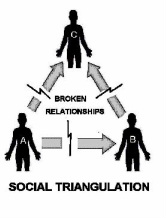
Citing the confusion of such a diagnosis there’s been a move away from it in recent years. In fact, the newest DSM, fifth edition, due to come out soon, has threatened to remove it completely. Part of the problem in making a diagnosis of narcissism is that many of the characteristics identified in the disorder are considered normal. For example, a narcissist has an “exaggerated sense of self-importance.” But what does this really mean? Exaggeration is a difficult word to define. And we are continually told that we all need to feel important. So, how can narcissism be a problem? The term “exaggeration” attempts to salvage that but what does it mean? To talk too much about it? But if a person doesn’t talk about it does that mean it doesn’t exist in his/her thoughts? Everyone wants to be important—even those who don’t talk about it. So, how can exaggeration be measured? It is not coincidental that as the definition of narcissism has changed so there has been a dramatic increase in the emphasis on self-esteem—not just by secular theorists but even by religious instructors. Thus, a generation ago, popular television preacher Robert Schuller proposed that “self-esteem” was the “new reformation” needed for the church to advance into the 21st century. This book was called, “Self-Esteem: the New Reformation” and attempted to deconstruct 2000 years of Christian teaching on the nature of faith and belief, calling for a “new reformation” centered not around God but man. One of his most staggering assertions was that " Classical theology has erred in its insistence that theology be 'God-centered,' not 'man-centered'" (p. 64). Schuller reserved particular animus for Martin Luther and John Calvin who espoused a doctrine of sin we call “total depravity.” What is sin? For Schuller it was related to low self esteem. "... the core of sin is a lack of self-esteem. ... Sin is psychological self-abuse. ... the most serious sin is one that causes me to say, 'I am unworthy. I may have no claim to divine sonship if you examine me at my worst.' For once a person believes he is an 'unworthy sinner,' it is doubtful if he can really honestly accept the saving grace God offers in Jesus Christ" (pp. 98-99). With statements like this from presumed moral authorities, is it any wonder the concept of narcissism is in such disarray? Some of the greatest resistance to the Schuller-esque teaching came from an ironic source: a psychologist who made no particular faith claims of his own. His name was Roy Baumeister, a professor of psychology at Florida State University. In one of his most quoted projects he dealt with four “myths” about self-esteem. What made Baumeister’s work so interesting is that it was research driven: - Higher Self Esteem Boosts Academic Performance - He studied the link between good grades and self-esteem in school age children. It’s become almost indisputable in most public education circles that if self-esteem improves so will academic performance. Baumeister demonstrated that there is no link between the two.
- Higher Self Esteem Reduces the Threat of Drug Abuse - What about drug abuse, promiscuous sex and other socially destructive behaviors? Again, the accepted wisdom is that what abusers really need is just to feel better about themselves; that they are driven to these forms of behavior because of low self-esteem. But the research does not bear that out.
- Higher Self Esteem Reduces Bullying and Aggression – Neither is there a link between aggression and low self-esteem. The playground bully is not really suffering from a poor self-image. He may be but Baumeister found no evidence to suggest that it was the cause of the aggressive behavior.
- Higher Self Esteem Boosts Job Performance - When he turned his research attention to adults, he studied their job satisfaction and job performance. The results were not at all what was predicted by the conventional wisdom. Baumeister concluded:
Self-esteem doesn't make adults perform better at their jobs either. Sure, people with high self-esteem rate their own performance better -- even declaring themselves smarter and more attractive than their low self-esteem peers -- but neither objective tests nor impartial raters can detect any difference in the quality of work. One can almost detect the sadness in Baumeister’s words. Since the days of Alfred Adler (the colleague of Freud), self-esteem has been viewed as the magic pill that will make everything better. Adler himself believed that self-esteem conflicts result from power differentials between small, helpless children and the giants around them. As children are empowered by these “giants” they can take their place alongside them. That’s what self-esteem tries to do. But there’s a problem with the logic and the evidence. As Baumeister demonstrated, taking their place alongside the rest of humanity does not occur through self-image enhancement but through behavioral output. In fact, if self-image becomes the standard—feeling good about themselves—it tends to undermine social development. In practice, this means people who focus more on themselves focus less on others. It would be unfair to suggest that Baumeister is accusing all those who emphasize self-esteem of creating narcissists. However, his research points in that direction and highlights the need to look even more deeply into conflicted self-image, not ignore it or explain it away. This is especially important for Christian theorists and therapists and underscores the age-old warning that “he who stands should take heed lest he falls” (1 Corinthians 10:12). In fact, the Bible has much to say about narcissism. It doesn’t use that term, of course, but the warning about its consequences is everywhere, including the criteria for identifying it. What term does it use? It simply calls it “pride.” If we want to be technical, we can call it “sinful pride” to distinguish it from the more innocuous variety. But it is pride nonetheless. And from a clinical standpoint, this means we must view pride, hubris, arrogance, selfishness and egocentrism as forms of narcissism. I propose a three-fold criteria for diagnosis: The Deceived Self Self-image is an important issue in human and social development. There is no escaping that. We must not minimize the effects of a “poor self-image.” However, we must be careful to define it. The terms “self-esteem” and “self-worth” are generally used without qualification or definition. This is part of the reason for so much confusion. “Worth” and “esteem” are value terms. They describe levels of importance. In mental health, “self-worth” and “self-esteem” generally mean a person likes himself, feels good about himself and doesn’t demean or put himself down. Often such discussions center around the role of “shame” in self-awareness. So, what is the basis for such a perspective on the self? Clearly, it is the unbiblical notion that we should like ourselves and feel good about who we are; that we should not demean or put ourselves down. There is really nothing to be ashamed of since we’re really not that bad. But this is not a biblical perspective. Therefore, narcissism and pride are the very result of the therapeutic messages intended to change them. What is the alternative? The biblical alternative to Robert Schuller’s “self-esteem gospel” is a view of the individual self rooted not in good feelings but in truth. The problem with self-image is not that a person puts himself down or doesn’t like himself. The problem is an erroneous view. In other words, a narcissist is deceived about himself. At the heart of narcissism is a false view of the self that discounts or rejects the truth about who we are and what we need. According to the Bible, God created humanity not to live by himself or for himself but to live in loving community with others. An example of how this worked out in practice is from general system theory: the laws of triangulation. According to system theory, whenever you have two people in a system there is likely to be stress. That's because in the process of being together they are competing for the same resources. Those resources may be material (food) or social (attention). But the very basis of the system is utilization of resources to advance the system. A profound need of the two members of the system is to restore stability, safety and predictability whenever something comes along to disrupt it. Change is stressful and frightening. And the most natural thing to do when feeling afraid is reach out to someone else: to restore your grip. This is what human systems do also. The Desperate Self One of the most profound needs of the self is validation. Validation means we are acknowledged to be a person. We derive our sense of self not simply from quiet reflections and ruminations but through various social interactions. From earliest childhood we look to others for safety and security in the face of overwhelming dangers and fears. When a child finds that desired safety in a parent or older sibling he eventually develops healthy “attachment patterns” in other relationships as he learns that there are ways to manage the stresses and changes around him. Meanwhile, the self is desperate. The danger, pain and failure in our world is so intense and overwhelming we will do almost anything to get it. This is the intensity of the drive for self-validation. And the reality is, desperate men do desperate things. This is the reason so much circumstantial evidence seems to link criminal and psychopathic behavior to those with self-image conflict. It's because they are desperate to deal with the pain inside. The problem is not the existence of pain. The problem is how they try to make it go away: at the expense of others. The Destructive Self That leads to my third criteria for narcissism: a desperate individual will be inclined to destroy others to save himself. You remember Charles Darwin and his theory of survival: survival of the fittest. In this world, with limited resources, there will always be competition for who gets what. The stronger will prey upon the weaker. And, according to Darwin, this process drives natural evolutionary development. Now, I happen to reject Darwin's evolution. But I think he was right about survival. In fact, I'll go even farther than he did and suggest that survival—what I call self-protection—is what drives all natural life forms. And if self-survival is at the core of our being, that means we are all narcissists to a greater or lesser extent. As I write this article there is a massive snow storm blowing through the East coast. As large storms often do, the combination of cold and power outages and clogged roads will most likely result in many deaths. That reminded me of the infamous tragic story of Donner Pass—another storm situation that ended in the loss of human life but also demonstrated my point about self-protection. You may have read about it. It was back in the 1840s and a few dozen travelers got stuck in a terrible snow storm and were forced to winter there at Donner Pass. They were totally stuck by the conditions and were at risk for dying, without food and shelter. As the days and weeks rolled on they became increasingly desperate. And destructive. Somehow they concluded that it was better to eat the dead people than to die themselves and so that's how the remaining people survived: cannibalism. My point in spoiling your dinner today? That depraved individuals will resort to just about anything to survive. Sure. This is an extreme and bizarre story. But it simply illustrates the human condition. What drove them to eat their friends and family? Narcissism. I could go on but I need to leave you with some hope. And there really is hope for the narcissism in all of us. That hope comes in the form of a solution that is extraordinary in its simplicity and effectiveness. What drives the narcissism in all of us is not only our need for survival but our desire for validation. We don't just want to live. We want to live well. And that means we want others to notice our accomplishments, to respect our abilities and to affirm our achievements. I'm reminded of how the Apostle Paul handled the deep-rooted narcissism at the church in Corinth; a narcissism that was destroying the very foundations of the church. The specific issue there was factionalism and conflict between various individuals, based, of all things, on who their spiritual mentors were. Brothers and sisters, I could not address you as people who live by the Spirit but as people who are still worldly—mere infants in Christ. 2 I gave you milk, not solid food, for you were not yet ready for it. Indeed, you are still not ready. 3 You are still worldly. For since there is jealousy and quarreling among you, are you not worldly? Are you not acting like mere humans? 4 For when one says, “I follow Paul,” and another, “I follow Apollos,” are you not mere human beings? (1 Corinthians 3:1-4) Some were followers of Paul. Some were followers of other spiritual leaders. The problem was not the spiritual leaders but the way they were using them to feed their own selfish ambitions. So, notice what Paul said to them: This, then, is how you ought to regard us: as servants of Christ and as those entrusted with the mysteries God has revealed. 2 Now it is required that those who have been given a trust must prove faithful. 3 I care very little if I am judged by you or by any human court; indeed, I do not even judge myself. 4 My conscience is clear, but that does not make me innocent. It is the Lord who judges me. (1 Corinthians 4:1-4) It is easy to miss the power of Paul's instruction, in part because of language. So let me paraphrase it. I know you are focused on which “spiritual mentors” you have and think that makes you important. And for those who claim to follow me, you may think I even care about your loyalty. But I don't! It's not that I don't care about you. But it doesn't matter to me whether you think I'm special or not. It doesn't matter to me even if I think I am special! The only opinion that matters of me is the one from the Lord. This is really the secret to conquering narcissism. It involves a death to our desire for self-protection, self-gratification and self-validation strategies. How can we do that? Only when we care more about finding protection, gratification and validation in our relationship with God rather than ourselves or others. I never said this was going to be easy. But I will say it's really quite simple. Sadly, most will not take this route. And even among those who name the name of Jesus Christ, they will generally continue to nurse and nourish the cannibalistic beast within. But this doesn't undermine the truth nor the power of Paul's simple solution. And even though none of us will probably be successful at slaying the beast, we can make progress. And my plea for you today is that you would try.
In popular thinking, imagination is equal to fiction. Therefore, if a child says he thinks there is a monster under the bed a frustrated parent might say, “you’re just imagining things”—as if that somehow cancels out the frightened child’s fears! More precise use of language proves that it doesn’t. While it is true that he is “just imagining things” that doesn’t exclude the possibility of a monster. When it comes to our understanding of the Bible we make the same mistake. Some conservative students of the Scripture get nervous if a teacher or author urges them to use their “imagination” to understand a passage. I submit it’s not because using the imagination is a bad idea but because of erroneous notions about imagination, akin to the monster under the bed variety. My point? Imagination has very little to do with truth or fiction. It is more accurately a description of how we experience truth or fiction than of the facts themselves. In other words, do we experience it vividly and personally (hence with “imagination”) or do we experience it from a cold lifeless distance? In this article I want to explore some aspects of imagination, how it functions and particularly its significance when it comes to studying and experiencing the Bible. It is my contention that our failure to properly use the imagination in our Bible studies, our sermons and our personal devotions accounts for much of the cold and lifeless experience with it. How can the Word of God be “living, and active, and sharper than a two-edged sword” (Hebrews 4:12) if we don’t learn to properly read or hear it? I submit they cannot. And part of proper reading involves a correct use of the imagination. What is Imagination? To answer it simply, “imagination” is, as the word suggests, “images” in the mind. Technically, the suffix “ation” suggests a process of creating or forming them. So the first thing we need to realize is that imagination is all about pictures or images. An interesting side-discussion here would be to contrast an “image-based” culture with a “word-based” one, as Neil Postman attempted to do in his classic sociological study, Amusing Ourselves to Death in which he critiques the modern rejection of concepts in favor of images. Basically he says that an image-based culture is inferior to a concept-based one because images are more limiting in the amount of information they can carry. Like I said, this is an interesting discussion but somewhat afield of where I want to go. But I did want to mention Postman’s criticism because not all scholars agree that we should put a high value on imagination. Back to the question though: what is imagination? And further, how does it work? If imagination is understood as images in the mind that contain information then we can understand why some have developed a suspicion about it. When I say it’s “in the mind” that implies it may not be “real.” Thus, the fear that imagination means “imaginary” or fake. We certainly don’t want to start suggesting that Bible stories are “imaginary!” Technically speaking, an imagination is an electro-chemical impulse in the neural fibers of the brain. In this way, it’s very similar (perhaps identical) to a memory. Again, with a topic like memory there are a hundred side-trails we could take and I will avoid the temptation. What is memory? How do memories develop? How are memories lost? Those kinds of questions. But one side-trail I believe is germane to this discussion relates to the neural processes involved in imagination. Aside from the fact that I love brain science and it’s a favorite hobby of mine, I want to explore these neural contours because I think they might yield some helpful (and dare I say “imaginative”?) suggestions about how to use it more effectively in the study of Scripture. Building Imagination Many experts would scoff at my oversimplification, but I’m going to give you the Reader’s Digest version of how imagination works. To do so I want to introduce you to my favorite part of the brain. It’s a tiny organ called the Hippocampus. The Hippocampus (the name literally means “seahorse” because of its shape) is located in the middle of the brain in a region called the Limbic System. I call the Hippocampus the Navigation System of the brain because it’s so essential in navigating (getting around) from one place to another. The Hippocampus controls our sense of time, motion and space. It enables us to locate ourselves in a given spot and then figure out how to get to the next one. For decades researchers have recognized the role of the Hippocampus in short term memory. Think of it like the Random Access Memory (RAM) on your computer. RAM, in case you didn’t know, is short term memory—in contrast to your hard drive which is long term (permanent) memory. So, as I type words on my keyboard I have to save my work periodically or I could lose it all if my computer crashes. I believe God designed the Hippocampus for a similar purpose: to gather various bits of information and hold them until the other regions of the brain can fully process them. Another interesting function of the Hippocampus is dreams. Some researchers believe that dreams are reflections or expressions of the Hippocampus at work. Much of the work of the Hippocampus, related to short term memory processing, is conducted while we sleep. Brain studies show that even though other sections of the brain go into rest mode during sleep, the Hippocampus stays very much active suggesting it is involved in memory processing while we are asleep. I’m sure you’ve noticed how disconnected and bizarre dreams can be. It’s because the Hippocampus is actually trying to consolidate memories and put them in some kind of meaningful pattern. But some things just don’t fit. So, the Hippocampus cobbles them together as best it can. Think of dreams as the potpouri of the brain. It’s comprised of the left overs from various experiences. But for some of them, the Hippocampus can’t figure out what to do with so it strings them with other random memories and tries to make something useful of them. A few years ago I was stunned by a book I read by computer genius Jeff Hawkins. Hawkins is one of the inventors of handheld computer devices like the palm pilot and smart phones. An amateur brain scientist like me (okay, not quite like me!) he believes that if we can learn how the brain processes data it will help us design more efficient computer systems. Particularly, he researched the Hippocampus and how it utilizes “predictive intelligence.” Again, I’m tempted to take one of these little rabbit trails of knowledge but I’ll resist and just get to the point: the Hippocampus takes individual bits of data (experience) and attempts to arrange them in some kind of “meaningful” picture or perception. When it doesn’t have enough data to fill in all the gaps it creates or predicts what should or could go there based on past experiences. This is how the Hippocampus is involved in the imagination process. It connects the dots of data and tries to make them into some kind of meaningful arrangement. Remember those old dot to dot coloring books? What looks like a mass of confusing dots on a page, upon closer examination, is a mass of confusing dots with tiny numbers beside them. Only when you draw a line from one to the next, following the numbers in order, does the real meaning become evident. This is what the Hippocampus does. It connects the various dots of experience and data. By “various dots” I want you to expand your understanding of what I mean to encompass just about everything you’ve ever learned. You think you know what a tree is? Well, you know what trees are because your Hippocampus has assembled an image of trees. That includes everything from the colors in a tree (green, brown, black) to their texture (rough bark, smooth leaves, hard surfaces) to the smell (woody? I don’t know, how do trees smell?). The image in your mind of a tree is actually a composite of dozens, even hundreds of various data points of information assembled in one meaningful picture. The Hippocampus is where that takes place. Hopefully you are beginning to understand what this all has to do with studying the Bible. Without a robust and dynamic appreciation of imagination, how can you really understand a passage of Scripture? For example, when Psalm 23 says “the Lord is my shepherd,” can you really even get what that means without some understanding of shepherds? And sheep? And pastures? And valleys of dark shadowed death? Without prior experience with these facts the words of the psalm will just be words on page. I want to also throw out another issue with these data points of experience. Though in a dot-to-dot coloring book there is only one way to connect them (following the numbers) this isn’t always so straightforward in real life learning. In fact, we don’t even possess all the dots. This is where Jeff Hawkins talked about predictive intelligence. What does the Hippocampus do if it is lacking some of the dots? It fills in the gaps with “predictions” about what could or should be there. According to Hawkins, that’s how intelligence works. It is always making predictions (we also call them assumptions). Part of the reason is because data is incomplete. Part is for efficiency. By making reasonable predictions we save computing time. We don’t have to figure out how to ride a bicycle every time we get on one. Memory and habit all play into this. It makes life a lot easier. So, as marvelous as imagination is, there are some risks. In the absence of all the data, we’re going to make some guesses. When it comes to Scripture this is inevitable. But it’s also why there are so many different understandings of the Bible. Because we are filling in the gaps with our own assumptions and interpolations we’re going to do so in different ways. Expectations and Experience One other thing I want to say about the Hippocampus and the Navigation System: because it utilizes predictive intelligence it is also the basis for what we generally call expectations. In other words, it has a significant part in the control of our thoughts about the future. Are you a pessimist? Do you see the proverbial glass half empty? Are you an optimist? Do you see it half full? The reason is likely to be found in the way your Hippocampus has learned to expect or predict the future. And the reason it does so is related to the way it arranges and orders the various data points of experience. I can’t emphasize this enough. If you are a worrier or are plagued by anxieties and dread you know what I mean. What we think is going to happen (or what we dread might happen) shapes not only our view of the future but our experiences in the present. And, in some ways, those expectations become what experts call “self-fulfilling prophecies.” If we think the future will be dark and discouraging we are seldom disappointed! Our expectations of dread end up coloring the experiences themselves and make them seem all that much worse. But to repeat my point: pessimistic expectations of what may happen come from somewhere: they come from the way our Hippocampus connects the dots of experience. Only when others hear us verbalize our gloomy worries does it become evident (at least to others) how incorrectly we are connecting the dots. I would say that one of the most important reasons to study the Bible is to help us connect the dots of experience more accurately. In other words, to transform our expectations. By the way, the Bible has a wonderful word to describe this process of transforming expectations. It’s called “hope.” The Sanctified Imagination So, what do we have so far? We have imagination, which is essentially images or pictures of ideas in the brain. And we have learned how these images are formed. I have also suggested that if we learn to use imagination correctly it will enrich our study of God’s word and renew our hope. So, the remaining task is to figure out how to actually use this information in studying the Bible. Of course, we need to be careful in this process. Just because we have an imagination doesn’t mean we will use it correctly. Imagination is a powerful dynamic in the brain and, like all powerful forces in this world, can be used or abused. Let’s try to keep this simple by looking at three ways we can cultivate what various authors describe as a “sanctified imagination.” Analyze the Word In order to use this marvelous tool God has given us and enrich our own study of the Scriptures we must first of all make sure we have enough “dots” in the Hippocampus to connect together. The more dots we have, in general, the more complete the image. So, how will we do that? By studying and analyzing it. As important as imagination is in the meditation process it doesn’t occur in a vacuum. As we’ve seen, the Hippocampus “builds” imagination from the raw material of data. The only way we’re going to have that raw material is by the time consuming and demanding task of analysis. I’m not saying you have to be a Greek scholar to study the New Testament (though it certainly doesn’t hurt). But you do have to have more than a passing knowledge of what the words really say and mean. This is why all Bible study methods involve various forms of “exigesis”—pulling the meaning from the words themselves. Though you can take short cuts in the analytical process—reading what others say in commentaries or study notes or sermons, for example, you won’t get as much that way. The more work you put into it the more imagination you’ll be able to build. I’m not going to spend time here describing basic Bible study methods but you can find any number of practical resources on this topic. Visualize the Word As I’ve said, the imagination involves creating mental images or pictures. This is what I mean by the second step in the imagination process. I’m going to use the word “visualize” to describe it. It’s probably pretty obvious how we visualize some passages of Scripture. For example, in Psalm 23, referenced earlier, you can understand how you might draw mental pictures of the Lord as a shepherd (visualize a middle eastern shepherd, leading a flock in the desert). This is probably why most of us find Bible stories easier to read and study than more didactic portions. So let’s talk about those portions a bit more. How can we visualize and create mental images for them? Let’s take the Book of Romans. I’m not possibly able to visualize the entire Book of Romans in this article! But I will suggest ways you could visualize the first few verses as an example of what I mean. Here are the words themselves: Paul, a servant of Christ Jesus, called to be an apostle and set apart for the gospel of God-- 2 the gospel he promised beforehand through his prophets in the Holy Scriptures 3 regarding his Son, who as to his earthly life[a] was a descendant of David, 4 and who through the Spirit of holiness was appointed the Son of God in power[b] by his resurrection from the dead: Jesus Christ our Lord. 5 Through him we received grace and apostleship to call all the Gentiles to the obedience that comes from[c] faith for his name’s sake. 6 And you also are among those Gentiles who are called to belong to Jesus Christ. 7 To all in Rome who are loved by God and called to be his holy people: Grace and peace to you from God our Father and from the Lord Jesus Christ. If you want to meditate on this passage you must first analyze it. I know that sounds like a lot of work and it is. As I said, you’ll get out what you put in. So, you’re going to need to use whatever analytical tools you can to begin inserting data points of understanding into your Hippocampus. Thus, you have to know something about Paul. If you don’t know much, you may need to read about him and his story in other passages of the Bible (for example, The Book of Acts). When I say “visualize” do I mean you have to have some kind of picture of Paul in your mind? Well, yes. And no. We obviously don’t have photographs of Paul! So we don’t know exactly what he looked like. But the shape of his face or whether he was bald or had a beard is only part of this. It’s where we have to fill in the gaps, somewhat. But there are plenty of other things we do know to give us a picture. We can know what town he was born in (Tarsus) and we can know where he went to school (Gamaliel) and approximately how old he was when he wrote these words (most likely around 50). Do you see how we visualize? It’s like building a tower with blocks: one piece of information at a time. Going on, you need to know what it means when he calls himself a “servant of Christ.” What about this word “servant”’ why does he use it? What does it mean? Unless you’re already a Greek student you will probably have to look it up in a Bible dictionary to find out. But that’s not hard. It just takes time. As you continue collecting bits of information from these words you will, at some point, need to string them together, connecting the dots you have so far. It is here the process of visualization becomes so important. I’m not going to pretend it’s a simple thing. Especially in these didactic portions of Scripture you can already see how much data you’re going to have in just a few verses. Keeping it all straight in your mind won’t be easy. Frankly, this is why so few people do it. But let me emphasize the importance of visualization. Realize that each bit of information you collect is a kind of picture or image. A classic Bible study tool was written years ago called “ Word Pictures in the New Testament” by A.T. Robertson I love the title! That’s exactly what words are: pictures. And Robertson’s classic work does a great job of drawing those pictures for you, showing the origins and meanings of Greek words and giving you mental images to add to your collection. Personalize the Word If you’ve analyzed and visualized a portion of Scripture you’ve already made a significant effort in learning to meditate on the Word of God. However, there’s more you can do. I call this step “personalization.” Here you use specific strategies to insert yourself into the text. Let me give you a simple example. I’ll try to make this an exercise in analysis and visualization as well. Here is a famous painting of a familiar Bible story: You probably remember Jesus’ parable about the shepherd and the 99 sheep. He tells it in Luke 15:4: "Suppose one of you has a hundred sheep and loses one of them. Does he not leave the ninety-nine in the open country and go after the lost sheep until he finds it?” The first step in this passage would be to analyze it. That means making sure you understand various things about the history and meaning of the words. You know what sheep are. You may know about how middle eastern shepherds did their jobs and the equipment they used (like the staff in the picture). You might need to bone up a bit on what the phrase “open country” means and even expand your understanding of how shepherds carry sheep (I suspect that picture is fairly accurate). I reproduced the famous painting of Jesus carrying the sheep at the beginning of this article to assist you in the visualization process. You can now picture the sheep and the shepherd carrying one of them, and even the grassy hills. But in order to personalize it you need to insert yourself in the picture, as it were. For example, instead of visualizing the sheep on Jesus’ shoulder (the sheep that no doubt wandered away from the flock and had to be rescued) picture that sheep as you. You wandered away from the flock. You got lost in the desert. Jesus had to go looking for you. And when he found you he put you on his shoulders to carry you because you couldn’t make it back by yourself. I know this sounds very juvenile and like something a Sunday School teacher might do with toddlers. But honestly, I think we all have to approach the Scriptures this way. When we fail to personalize them we lose our connection to them and, eventually, our knowledge breaks down. There are other steps in the overall process of meditation on Scripture. I’m only focused here on the use of the imagination. But I don’t want to leave you without putting it in the larger context. I’ve talked about the importance of the background and the details. But I can’t fail to emphasize the need for application. In the Book of James we are warned that those who read the Bible (even study it) and fail to obey it are like people who look in a mirror but then forget what they really look like (James 1:24). Without obedience, Bible study is not just an exercise in futility. It actually makes our state worse than if we didn’t read it at all. Jesus promised that if we know the truth the truth would set us free (John 8:32). But the only way to really “know” the truth is to experience it. That’s literally what the Greek word for “know” means: to know by doing. This implies obedience and action. I will say in closing that the only way obedience to truth is even possible is a work of God’s Spirit, the Holy Spirit of God, equipping us and enabling us to do what it says. We can’t do it on our own. But that’s another article for another time.
There have been times in my life when I seem extra vulnerable to the weird, bizarre or extraordinary—dare I say paranormal? Notice I’m not saying supernatural. At least not yet. That remains to be seen. But that’s what I mean. I’ve always relied heavily on something called “instinct” or “gut feeling” when making decisions. That’s part of it. But I have something else in mind.
I’m referring to the sense that I know what’s going to happen ahead of time. The term “premonition” is often used. The times I’m most susceptible are times of anxiety and confusion. From a neurological point of view, it makes sense that I would be vulnerable to relying on alternative forms of knowledge during such times. I’ve learned in recent years that it’s the function of my Hippocampus to connect the “dots” of experience into some kind of meaningful order. From a strictly biological perspective, I suppose you could say that’s what is going on: that a “premonition” is simply a “perception” with a bizarre twist.
But the paranormalists are not so easily dissuaded. And I must admit that, even though I can explain them away, they still hold enormous power. In my life, dreams—especially nightmares—are one area. When my son was in combat for months in Afghanistan I had no end of anxiety and concern for his safety. Not surprisingly, he showed up in my dreams as well. One night I dreamed the doorbell rang and I got up out of bed and went to answer it. I didn’t even get that far, because I saw that it was two Marines in dress uniform, and I knew exactly why they were at my door. I awoke with a start, got up and went to the bathroom, glad that it was only (another) bad dream. But then I lay back down, intending to shake it off and go back to sleep. It was then that this idea about premonitions became more haunting than the dream. Sure, it was a dream. But maybe it was a warning. Maybe there really would be a visit from the “Casualty Assistance Officer” later? By that time I couldn’t shake it off. And I found myself in a heated argument about the possibility of premonitions, salted with management strategies for what I would do if it really happened. As an evangelical Christian, a conservative, reformed theologian and a psychologist, I bring a unique perspective to this debate. Part of me wants to laud anything supernatural—especially in our materialistic age. Certainly I would be the first to admit that God speaks—didn’t Francis Schaeffer my hero write, “He is There and He is Not Silent?” If I were to argue against premonitions on strictly on the basis of an anti- supernatural argument, I would pull the rug out from under every other belief in my arsenal.
So, why not? Why couldn’t it be a premonition? I remember when I was a kid in school we had to watch some dorky, New Age type movie about Native Americans called, “I Heard the Owl Call My Name.” I don’t remember the details but it seems like the title is some Indian legend that before your death you hear the owl call your name. I guess you could call that a type of foresight or premonition. Notwithstanding the Indian religious themes, I still have to ask, “why not?” Even from my staunchly biblical point of view, is it impossible that God could orchestrate such things—like intersections between the natural and supernatural world?
No. It’s not impossible. And there are way too many examples both in Scripture and history of people who have had such experiences to rule them out entirely.
But, let me hasten to add, there have been far too many more who have totally misinterpreted the owl’s call! And this is what makes me wonder about them—all of them—and if God is really the one behind them. I don’t doubt that God could or that he has. But I’m doubting that he usually does.
For one thing, if my own life is any example, it’s almost inevitable that I’m going to interpret any kind of strange episode incorrectly. Take my nightmare, for example. Was it some kind of premonition about events that would unfold later? Obviously it was not. My son was released from active duty months later without injury. Was it some other kind of warning—perhaps for a later date? Perhaps but that gets pretty murky. There’s always the Freudian interpretation—that it reflects my anxieties and uncertainties about his safety.
So, what is it? Warning about the past or the future? That’s really what it boils down to. If it’s a premonition, it’s about the future. If it’s simply a histrionic nightmare, it’s a kind of warning about the past—unresolved fears and worries.
As I think about this issue of premonitions or foresight, I’m reminded of a curious story from Scripture. It’s detailed in the Book of Acts.
10 After we had been there a number of days, a prophet named Agabus came down from Judea. 11 Coming over to us, he took Paul’s belt, tied his own hands and feet with it and said, “The Holy Spirit says, ‘In this way the Jewish leaders in Jerusalem will bind the owner of this belt and will hand him over to the Gentiles.’”
12 When we heard this, we and the people there pleaded with Paul not to go up to Jerusalem. 13 Then Paul answered, “Why are you weeping and breaking my heart? I am ready not only to be bound, but also to die in Jerusalem for the name of the Lord Jesus.” 14 When he would not be dissuaded, we gave up and said, “The Lord’s will be done.” Acts 21
This guy Agabus shows up earlier in the text as a prophet, warning about an impending famine—though history suggests it didn’t occur for several years. Here he again makes a prophetic announcement, dramatically taking Paul’s belt and issuing the warning that Paul would be bound and handed over to the Gentiles.
There is no censure of Agabus here. Nor is there any indication that he was making this up or speaking by some kind of demonic power. The curiosity is the way the others respond to it. Notice what Agabus does and does not say. He doesn’t warn Paul against going to Jerusalem. Though it has often been interpreted that way, Agabus simply warns what is likely to happen. It’s the onlookers who interpret the message as a warning for Paul not to go.
I believe this illustrates the problem with relying too much on mystical insights or premonitions for any kind of information. Even if we grant that God gives them, the chances are, we’ll totally misunderstand and misinterpret them. Paul was not dissuaded from his decision to go to Jerusalem. It had been part of his plan all along. The insight/premonition was merely a diversion—perhaps a test for the congregation more than for him.
I’m not trying to equate my bad dream with Agabus word from the Lord! I realize there’s a huge difference. But I’m trying to see the larger function of such unconventional bits of information. And it seems to me that their main purpose is more reflective than anything else. By that I mean, they function to show us things about ourselves more than about the future. I’m not ruling out the possibility that they do contain information about the future—especially if God is in it. But I’m suggesting that, in cases like this at least, God’s purpose is not merely to satisfy our curiosity.
And as I take this a step further, I have to think about the larger scope of biblical prophecy—take the Book of Revelation for example. How many Christians and churches have split over their different interpretations? But I’ve long thought that the purpose of the Revelation is not simply to give us information about the future: to satisfy our curiosity for what’s coming next. No! The purpose is to overwhelm us with the otherness and mystery of God and therefore to worship him—because we are in the presence of things much too difficult for us to comprehend.
And couldn’t this be said about my nightmares and premonitions too? God’s purpose is not simply to pull back the curtain and let me peek at what’s coming up in Act II. His purpose is to knock me off my feet long enough by the mystery so I see him more clearly than I did before.
Now, as I think about it, this is generally what prophecies and foresight have been for. Think about those haunting scenes from Isaiah 6:
1 In the year that King Uzziah died, I saw the Lord, high and exalted, seated on a throne; and the train of his robe filled the temple. 2 Above him were seraphim, each with six wings: With two wings they covered their faces, with two they covered their feet, and with two they were flying. 3 And they were calling to one another:
“Holy, holy, holy is the LORD Almighty; the whole earth is full of his glory.”
4 At the sound of their voices the doorposts and thresholds shook and the temple was filled with smoke.
5 “Woe to me!” I cried. “I am ruined! For I am a man of unclean lips, and I live among a people of unclean lips, and my eyes have seen the King, the LORD Almighty.”
6 Then one of the seraphim flew to me with a live coal in his hand, which he had taken with tongs from the altar. 7 With it he touched my mouth and said, “See, this has touched your lips; your guilt is taken away and your sin atoned for.”
8 Then I heard the voice of the Lord saying, “Whom shall I send? And who will go for us?”
And I said, “Here am I. Send me!”
A prophecy—a premonition, a “word of knowledge”—whatever you want to call it—has really one overarching purpose in God’s plan: to get our attention.
There are other purposes and plans at work in these mysterious phenomena. I don’t doubt but what there are other powers and influences that love to capitalize on them. I am not for a minute ruling out that the powers of darkness have no interest in using them to advantage. But God’s purpose is still supreme—and even if there are more nefarious strategies afoot, it’s God’s I want to focus on most. The content of my bizarre experiences is not nearly so important as their effect. And how I react to them—more than how I interpret them--makes all the difference.
|